
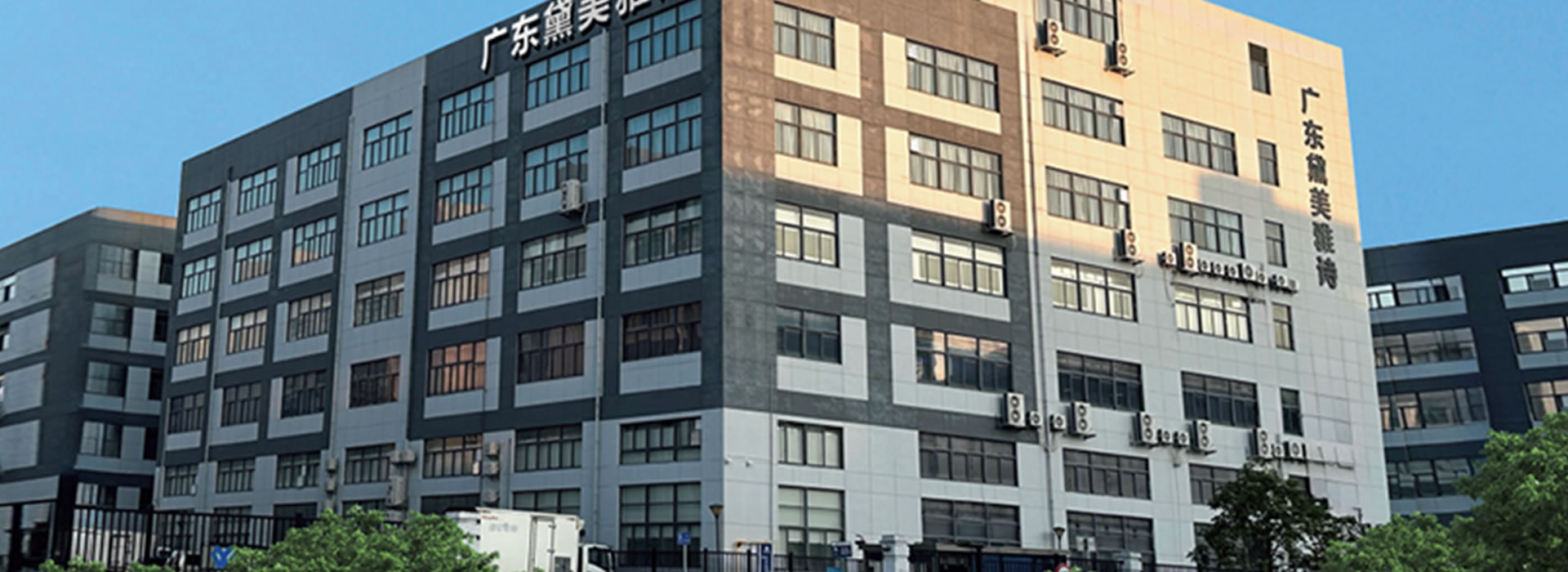
Customized processing of cosmetics for institutional use: Process analysis and collaboration path from formula to finished product
In the beauty and care industry, hospital cosmetics (i.e. large capacity packaged products used in professional places such as beauty salons and SPA clubs) have different requirements for product stability, user experience, and cost-effectiveness due to their unique usage scenarios. As Daimei Yashi, a company specializing in customized processing of hospital cosmetics, we provide full process process process support from formula research and development to mass production based on the actual needs of our customers. The following is an explanation of the key points, cooperation models, and implementation steps for customizing hospital cosmetics.
1、 The core process of customizing hospital cosmetics
There are differences between the process design of courtyard decoration products and the daily chemical production line. Firstly, the container capacity is usually between 500ml and 5L, and the product needs to withstand frequent opening and retrieval, which has a higher standard for the stability of the anti-corrosion system. At the formulation development stage, Demi Estee will select the anti-corrosion scheme according to the product dosage form (such as cream, lotion, gel and water), and verify the consistency of product properties through accelerated stability test (90 days at 48 ℃, 12 months at room temperature).
Secondly, the texture and extensibility of courtyard decoration products need to be coordinated with the manual operation of beauticians. For example, the thixotropic properties of massage cream - maintaining an appropriate consistency in the container, and smoothly pushing it away after contact with the skin through body temperature and manual action. We adjust the homogenization speed (usually controlled at 2500-3500rpm) and stirring parameters during the cooling stage in the emulsification process to achieve the expected rheological behavior of the material.
Thirdly, the addition and protection of active ingredients. Cinema products often contain various plant extracts, peptides, or vitamin derivatives. We adopt a gradient cooling process: when the temperature of the material drops below 45 ℃, thermosensitive components are added and nitrogen protection is used to reduce oxidation. Before filling, perform viscosity, pH value, and microbiological index testing on each batch of materials.
2、 The types of processing services undertaken by Daimei Yashi
We provide three types of services for beauty brands, beauty salon chains, and professional skin management centers:
Sample customization: Customers provide reference samples or formula ideas, and we complete ingredient analysis, formula formulation, and three batches of small sample trial production.
Formula development: When customers request efficacy such as moisturizing, soothing, and firming, our laboratory selects matching active ingredient combinations from the raw material library to form exclusive formulas.
Packaging material adaptation: Assist customers in selecting hospital containers (vacuum bottles, press pump heads, hoses, etc.), and test the compatibility of packaging materials with the material body (including heat resistance, cold resistance, and sealing).
3、 Collaboration process: from requirement communication to finished product delivery
The entire collaboration process is divided into five stages, with a total cycle of generally 25 to 45 working days (depending on the complexity of the formula and the procurement cycle of the packaging materials).
Phase 1: Requirement Confirmation
The customer provides product dosage form, capacity specifications, expected efficacy, usage scenario description, and budget range. Daimei Yashi issued a "Customized Feasibility Assessment Form" to clarify the compliance of raw materials (in accordance with the requirements of the "Cosmetic Safety Technical Specification") and the basic quotation range.
Phase 2: Sample trial production
We produce three batches of 50-100g samples, accompanied by a complete ingredient list and instructions for use. After customer experience, the formula of the sample can be adjusted (up to two free adjustments). At this stage, both the packaging material model and filling method are confirmed.
Phase 3: Pilot scale up
Produce 5-10kg of medium sample according to the small sample formula and simulate the conditions of a large-scale filling line. The intermediate sample is sent to a third-party testing institution for microbiological and physicochemical index testing. After issuing the testing report, the customer confirms the final formula and process documents.
Phase Four: Mass Production
Sign the 'Contract for Commissioned Processing', and the customer shall pay 50% of the material preparation fee. We purchase raw materials and packaging materials, and arrange production scheduling. Production cycle: Approximately 7-10 working days for products weighing less than 500kg. The key control points include emulsification uniformity, filling net content deviation (within ± 1%), and sealing performance.
Stage 5: Inspection and Delivery
Each batch shall be sampled and undergo factory inspection (appearance, aroma, viscosity, pH, heat and cold resistance). Provide a copy of the inspection report. Ship according to the logistics method specified by the customer. After the final payment is settled, all formula materials and production process instructions will be delivered.
4、 Ways to initiate collaboration
If you need to know the specific processing costs or request the "Customization Requirements Form for Courtyard Decoration Products", you can submit your requirements through the contact page of the official website of Daimei Yashi, or call the customer service hotline. Our technical team will respond within 2 working days and provide suggestions for formula development.
The customized processing of hospital cosmetics essentially involves repeated calibration of technical parameters and user experience. Daimei Yashi helps partners transform product concepts into stable products for daily use in beauty salons through clear process standards and segmented collaboration processes. For each batch of materials, production records and sample files are kept for easy traceability and optimization in the future.